In a 2013 episode of Victorious called “Slap Fight”, the characters compete with each other to get the most followers on The Slap (the show’s version of Twitter). They put off their school work and become addicted to social media. The characters would do anything to get more followers: Robbie gave out prizes, Beck live streamed, Jade walked around school with a megaphone forcing people to follow her, Cat posted a thousand tweets a day, Tori attempted online challenges, and Andre got someone to tweet for him. This episode aired six years ago but is still relevant today. What are the negative effects of social media?

Addiction and Social Media
Everyone has been guilty of scrolling through social media before realizing that they have been scrolling for an hour or two. But when does this become a problem?
Do you constantly check your phone while your driving? Do you scroll through Twitter instead of interacting with the friends your sitting with? Do you only do things so you can post about it on Facebook?
As of right now, in the Diagnostic and Statistical Manual of Mental Disorders social media addiction is not classified as a disorder. It is still in the research phase. However, there are questions here that can help you find out if you have a serious problem with social media.
There have been studies that show that excessive social media use has similar symptoms as other addictions. These symptoms include changes in mood, conflict, and social withdrawal.
So if like in Victorious, your use of social media starts to affect other aspects in your life like work, social, mental, school, you may need to address it.

Mental Health and Social Media
While social media makes communication easier than ever before, sometimes it only goes one way. If you only passively consume the information you are seeing on social media and not interacting with others, it will cause you to feel worse.
Excessive usage of social media can be linked to depression, anxiety, low self esteem, and other mental health issues. Without that interaction with other people, you will start to feel isolated and lonely.
The Millennials and Gen Z are in a mental health crisis right now, so much so that tweets about it go viral.
The number of followers, likes, or comments you or someone else get does not matter. What matters is the interactions you have with people, real interactions in the real world.
FOMO and Social Media
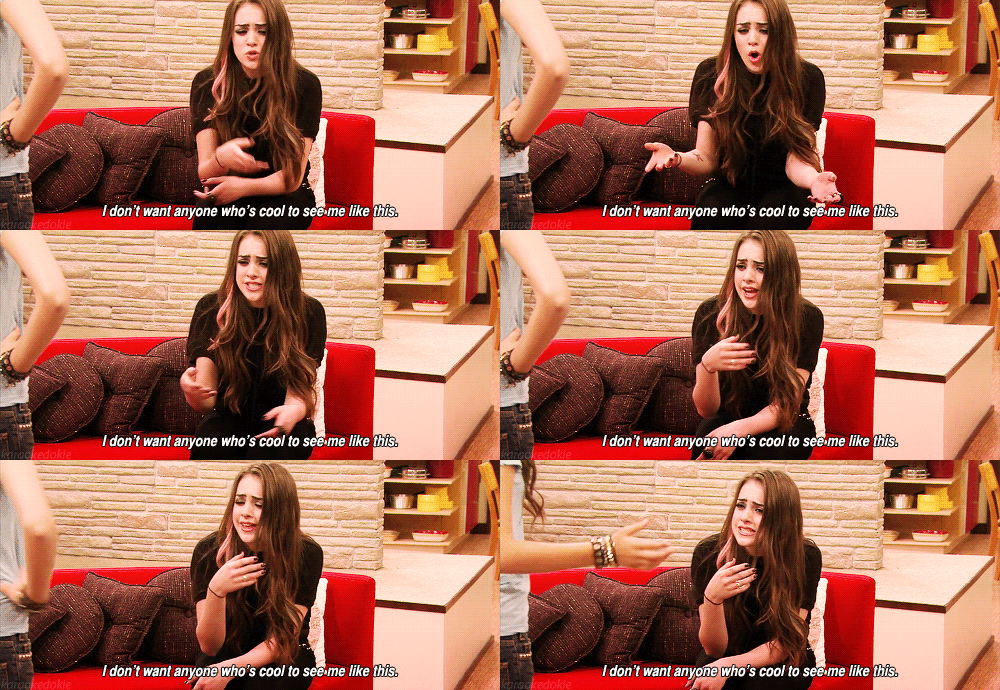
Are my friends having fun without me? Why didn’t I go to that party? How come I wasn’t asked to hang out with them?
One of the biggest issues that have come with social media is the feeling of FOMO, or the fear of missing out. It is a pretty common feeling that everyone has dealt with at least once, but probably a lot more than that.
Social media has made it so much easier for us to feel like we have missed out on something. It has also made us feel like we have to be constantly doing something cool or fun to post so other people can see. So when we do not do this and we see others having a good time, we get FOMO.
Social media allows us to selectively post what we want. No one wants to let others know that bad and hard things, only the good and fun things. So more often than not, what we see on social media is not the whole picture. But you still can’t help but compare your life to everyone else’s on your feed. This is called social comparison and as a result it makes you less happy.
Detox from Social Media
There are a lot of negative effects that we need to be aware of when it comes to social media. Excessive use of social media is linked to symptoms of addiction, decline in mental health, and feeling like everyone’s life is better than yours.
The best way to combat these symptoms is to delete your social media apps. A detox and cleanse from social media will allow you to enjoy the real world for awhile because sometimes the digital world just gets to be too much.
At the end of the episode the characters learn their lesson about how social media can negatively affect their lives. Tori says, “I am happier with the five real friends I have at this table than I would be with 20 million friends on a computer that I don’t even really know.”


 Caro's Corner
Hi Caroline! First of all I love the fact that you tied Victorious into your post and used it as a common thread throughout- it made it super enjoyable to read. Your points also flow very well and the transitions between topics are very smooth. You did a really awesome job of using supporting evidence throughout your post as well, especially in your section about social media addiction. You bring up a really excellent point in your section about mental health, especially when it comes to people who are just scrolling aimlessly and not actually interacting with the content in their newsfeeds. This is exacerbated when we see our friends hanging out without us and suddenly we become hyperaware of the fact that we are alone and scrolling through social media rather than hanging out with friends. I agree with the digital world becoming too much sometimes and completely removing ourselves from social media is a great way to gain new perspective and reevaluate our social media usage habits.
LikeLiked by 1 person
Caroline,
I really liked your work here. I think pulling in examples from TV shows is such a great way to get people to understand a topic. I thought it was really fascinating how you incorporated information about how sns obsessions can be seen as a mental illness and there is still work done to classify it. I think it is obvious that it has a negative affect on mental health, but then again I’m not a pyschologist so, I am not really an authority on this. Even though this episode is a dramatazation it is not that far off from what we see in our real life. Great work Caroline you really MADE IT SHINE!
LikeLiked by 1 person