How College Students Use Social Media.
The average college students social media feed probably consists of pictures of sorority sisters in matching shirts at their most recent event, shots of of friends studying abroad, posts from last weekends parties and the following mornings at brunch, and snapshots from a classmate’s adventures around the city. We are expected to post about our lives to share with others, but why do we do this and are there any consequences to it?

#ALWAYSCONNECTED
Social media is what connects college students. It keeps us updated on our friends back home, lets us see what our former high school peers are up to, and allows us to keep tabs on what is going on around campus.
Social media is an incredible tool that this college generation grew up on. From the creation of Facebook, to the launch of Twitter, and to the rise and fall of Vine, social media has kept us connected to everything and everyone all the time. Our feeds our inundated with pictures and updates from everyone we have ever known and we are just constantly scrolling through it.
It is almost unheard of to find someone that has zero social media accounts because this is how this generation keeps in touch with each other. You might find yourself saying more and more that “I haven’t talked to them in awhile, but I saw that they went to New York a couple weeks ago on Facebook”.
Our face to face encounters seem to dwindle because we feel like we already know what is going on because social media makes us feel like we are always connected.
#MEMORIES
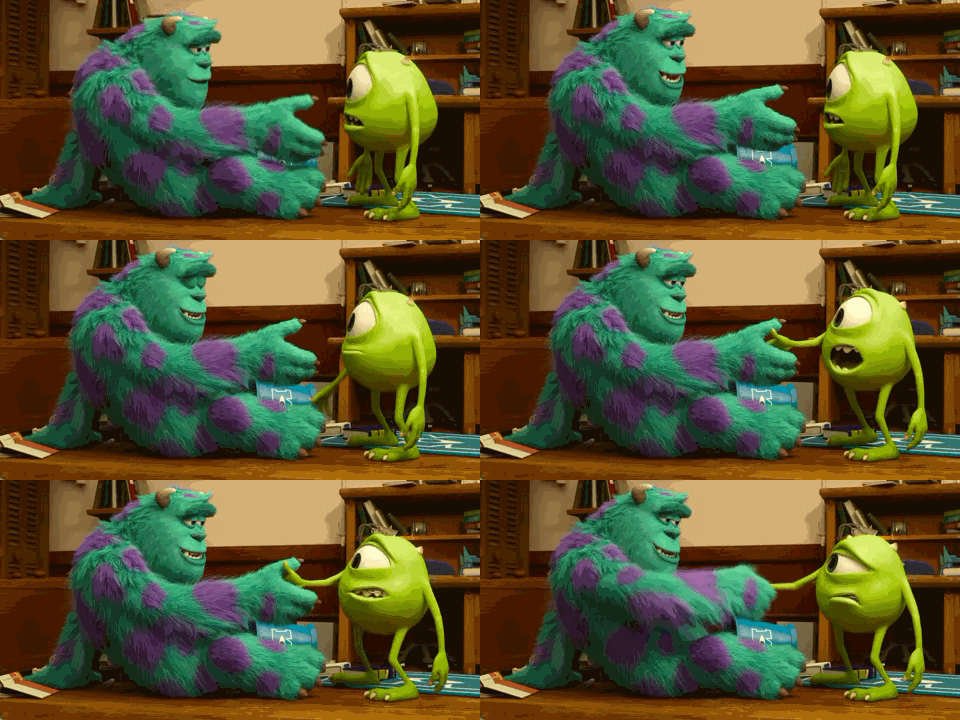
“Pics or it didn’t happen.” Everyone knows this and says it jokingly when the take pictures to upload onto social media. But really, it does feel like if you don’t post something to social media how will anyone outside you inner circle know what you have been up to?
While the pictures behind the actual event may be a bit staged, the memories of it are real. We want others to know that we had fun or that our friends mean a lot to us. And while there are other ways to do this, social media is just the easiest way for our generation.
When your SnapChat shows you what you were doing on this day 2 years ago, you are happy that you were able to capture these moments so you can look back on them and share them with your friends.
#FOMO
While there are a lot of great things that social media can do, it is not without its faults. Social media has been connected to the cause of depression, social isolation, and loneliness.
Now that everyone is constantly connected into everything, there is not much that we do not miss. Seeing pictures of all your friends having fun at a party that you didn’t go to or having your feed blow up with pictures and videos of the concert in town that you couldn’t attend can cause feelings of being left out.
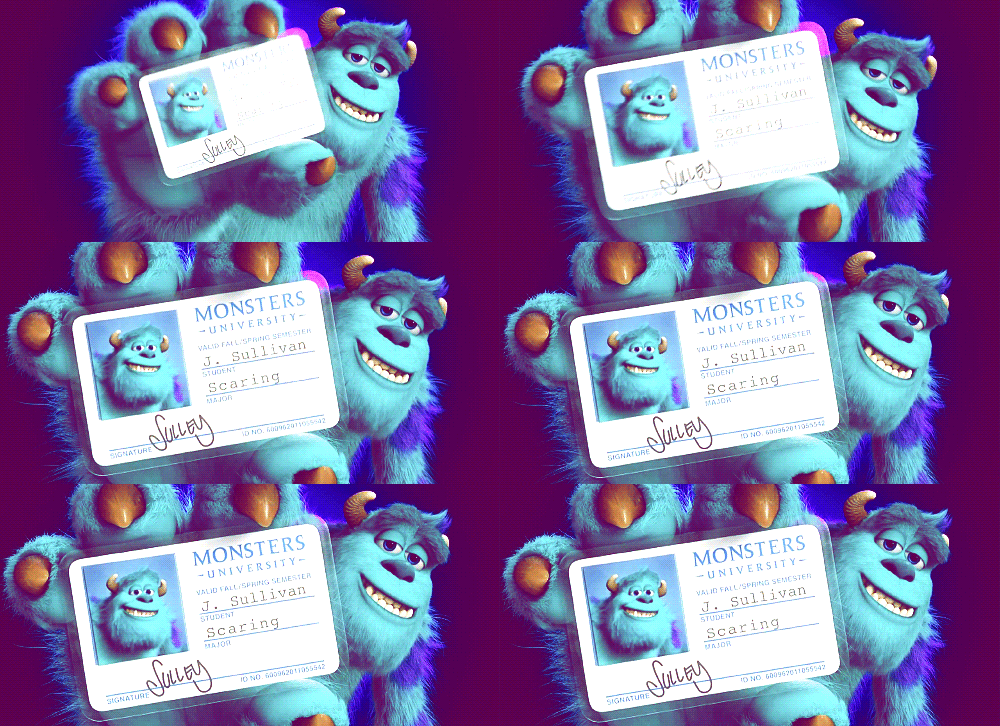
FOMO, or the fear of missing out, is the feeling of anxiety when you realize there are fun and exciting things happening that you are not apart of. Everyone feels it at some point, but with constant updates throughout social media, it is something that is hard to escape from.
It is important to remember that what we see on Instagram or Facebook, is not the whole story. Maybe the event wasn’t as cool as it was made out to be. While you will always feel like you’re missing out on something, you can find solace in knowing that the picture might not actually be worth a thousand words.

#EXPECTATIONSvsREALITY
One of the most important things that someone should remember about social media is that every picture was chosen very deliberately. Every person’s account is specially curated. Not everyone’s online identity actually matches up with what they are like in the real world.
If you post fairly regularly on social media, you and your friends have probably perfected the art of getting the perfect picture. You know that crouching on the ground gets you the best angle, you know which way to turn to get the perfect light, and the perfect witty caption to sum up the entire experience.
Our social media feeds are what others expect us to be like, but in reality they are carefully posed or carefully chosen outtakes. Everyone knows this and everyone does it, but are more than willing to overlook it because that is just how social media works. So don’t forget that every post is not what it seems.

#FILTER
Social media is not the most authentic thing in our lives, but it keeps us connected to people that we otherwise would have lost touch with. We grew up on it and it has become a part of our daily lives. And while the pictures we decide to upload are chosen with a lot of thought, the memories from that day are something we will want to remember. Everything on social media has a filter on it, maybe not physically on it but definitely in way it is was chosen to be shared in the first place.Always remember that a photo does not tell the whole story. And if your FOMO just won’t go away, filter out that negativity by turning off your phone and just have fun in the real world for a little while.

Source list: Chapter 2 of “Social Media Communication: Concepts, Practices, Data, Law and Ethics” Second Edition by Jeremy Harris Lipschultz, Chapter 12 of “A Networked Self” by Andrew L. Mendelson and Zizi Papacharissi

 Caro's Corner

Hello!
What you said about how “Our face to face encounters seem to dwindle” was extremely true and relatable. Especially for college students, within our millennial society there is a lot less of face to face interactions. There are people that I follow on Instagram that I go to school with that I have barley talked to in person, but know a lot about there life because of social media. Personally this is very sad for me, yes it is nice to have “knowledge” or peoples lives through the media, but is it always real? Lastly I like how you touched upon the thought that “a photo does not tell the whole story”. In this virtual society I feel as though many (including myself) get lost in social media images and do not take a step back and realizes that I is not always the reality. Overall, great post!
LikeLiked by 1 person